16×20 Gable Workshop Plans
Our biggest workshop plan — 320 sq ft of professional-grade shop space with full framing drawings and materials list.
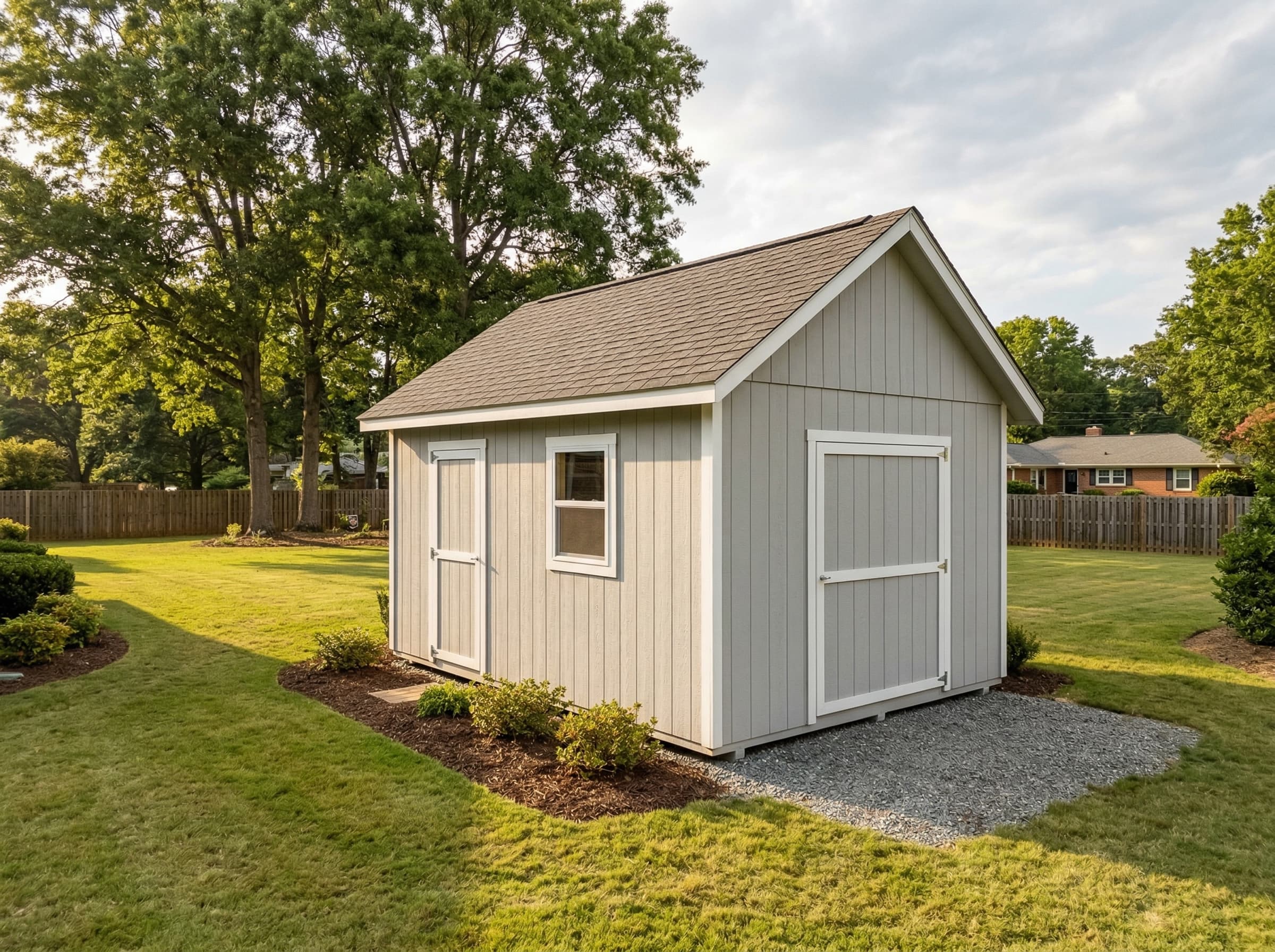
Summary
The 16×20 Gable Large Workshop is a 320-square-foot gable shed (16′ wide × 20′ deep) with 8′ walls and a 6/12 roof pitch. Estimated material cost is $10,454 based on Charlotte, NC area pricing. This is for woodworkers, metalworkers, and serious makers who need a real shop separate from the house. Plans include interactive 3D preview, framing drawings, an optimized cut list, and a complete materials BOM.
Floor Area
320 sq ft
Dimensions
16′ × 20′
Wall Height
8′
Roof Pitch
6/12
About This Design
The 16×20 is a professional-grade workshop in a residential accessory structure footprint. At 320 square feet, it matches the floor area of a one-car garage while keeping the roofline and massing of a well-proportioned shed. The 16-foot width is the critical dimension — it provides full table-saw clearance in both feed directions with room for an assembly table alongside, something narrower shops cannot achieve without constantly reconfiguring.
Seven windows and a side entry door create a bright, well-ventilated workspace. The paired windows on the back wall are a deliberate choice for a workshop: they eliminate the dark zone that develops at the far end of a deep building. Two windows on each long wall provide symmetrical light so you never cast your own shadow on the work surface.
The 2×6 wall framing makes this building easy to insulate, wire for 20-amp circuits, and plumb for an air compressor line — all within the wall cavities. This is a building designed to be a heated, lit, conditioned workspace from day one.
Key Features
- 320 sq ft floor area — professional shop layout with room for stationary tools
- 72" main door plus 36" side entry for everyday access
- Seven windows for abundant natural light in every zone
- 2×6 wall framing for insulation, electrical, and air lines
- 16' width provides unrestricted table-saw and assembly-table clearance
- 8' walls handle overhead dust collection, lighting, and tool storage
Build Notes
A 16×20 workshop should sit on a concrete pier or post-and-beam foundation for long-term stability under heavy tool loads. If using skids, seven 4×6 timbers running the 20-foot direction at approximately 2 feet 8 inches on center provide the necessary support. Floor joists are 2×10 at 16-inch spacing for a 2-foot-8-inch span — this produces a floor stiff enough for a cast-iron table saw without vibration.
Frame with 2×6 studs at 16 inches on center. At 16 feet wide, roof framing requires 2×8 or 2×10 rafters at 24-inch spacing for a 6/12 pitch, depending on local snow load requirements. The 72-inch double-door header needs an LVL beam or steel flitch plate — the engine sizes this based on the span and load.
The wide gable ends require intermediate gable studs to support the sheathing against wind loads. Install structural sheathing on all four walls for racking resistance — at this building size, let-in bracing alone is not sufficient.
Best For
This is for woodworkers, metalworkers, and serious makers who need a real shop separate from the house. The floor plan supports a table saw at center, a planer and jointer on one wall, a miter station on the opposite wall, and a full assembly bench near the back with room to circle it. It doubles as a professional-grade art studio, a small-engine repair shop, or a combination workshop-garage for a motorcycle or vintage car restoration.
Interactive 3D Preview
Loading 3D preview…
Frequently Asked Questions
How much does a 16×20 shed cost to build?
A 16×20 gable workshop runs approximately $7,650–$9,500 in materials for a DIY build, or $29,850–$36,500 installed if you hire a contractor at Charlotte, NC labor rates. The 2×6 walls and heavier roof framing add substantially to the lumber bill, and door hardware quality drives the upper end of each range.
Do I need a permit for a 16×20 shed?
At 320 square feet, this building requires a full building permit with engineered plans in most jurisdictions. The 16-foot width may trigger increased setback requirements. Plan for electrical, plumbing (if applicable), and structural inspections. Allow 4–8 weeks for plan review.
What materials are included in the 16×20 shed plans?
The plans include a complete framing package with cut list, materials BOM covering lumber, sheathing, roofing, siding, fasteners, and hardware. The interactive 3D preview lets you see the finished design before you build.


