12×16 Gable Workshop Shed Plans
Full framing drawings, optimized cut list, and materials BOM for a serious 12×16 gable workshop.
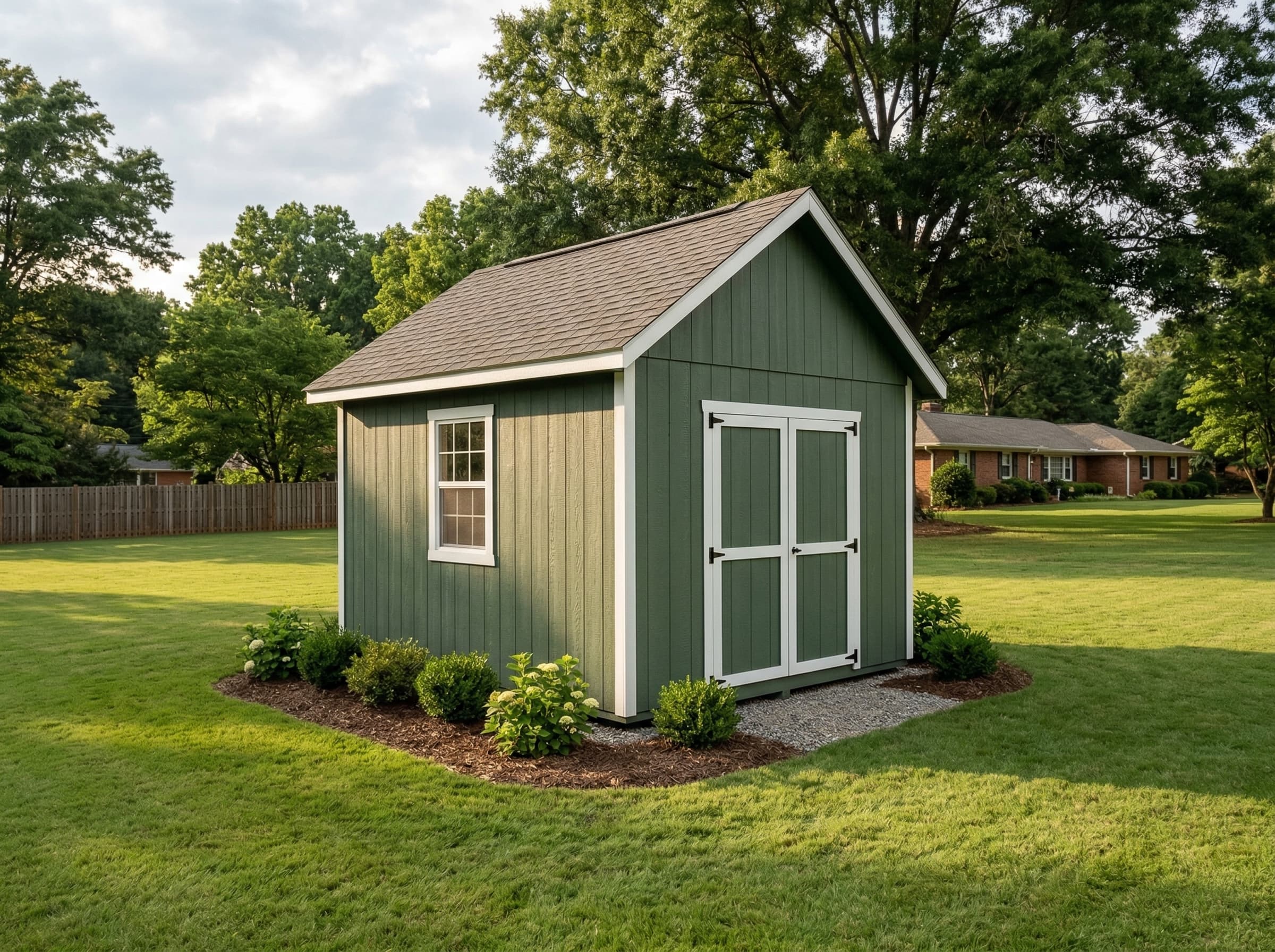
Summary
The 12×16 Gable Workshop Shed is a 192-square-foot gable shed (12′ wide × 16′ deep) with 8′ walls and a 6/12 roof pitch. Estimated material cost is $6,425 based on Charlotte, NC area pricing. The 12×16 is sized for the serious DIYer who builds furniture, repairs small engines, or works with full-size sheet goods. Plans include interactive 3D preview, framing drawings, an optimized cut list, and a complete materials BOM.
Floor Area
192 sq ft
Dimensions
12′ × 16′
Wall Height
8′
Roof Pitch
6/12
About This Design
At 192 square feet, the 12×16 is the crossover point where a shed stops being pure storage and starts functioning as a genuine workshop. The extra 12 inches of width over a 10-foot design opens the floor plan considerably — a full-size workbench runs the 16-foot wall with room for a tool chest beside it, and you can still park a riding mower or a small tractor in front of it without squeezing.
The 64-inch double door at center-front is the defining feature for a workshop: it handles plywood sheets and full-length lumber without tilting the load, and it stays out of your way when you are moving material in and out repeatedly. Both side walls carry a 36-inch window to give you cross-ventilation on hot days and natural light from both directions so shadows from one window do not obscure your work surface.
With 8-foot walls and a 6/12 gable roof, the ridge sits just over 14 feet above the floor — tall enough for an overhead shop light on a pendant cord and still well within standard HOA height limits. The gable ends above the top plate give you a natural location for attic ventilation and additional loft framing if you want overhead storage for seasonal items.
Key Features
- 192 sq ft floor area — fits workbench, tool storage, and riding mower
- 64" double-door entry handles full plywood sheets and long lumber
- 6/12 gable roof — ridge at roughly 14' for pendant shop lights
- Matching 36" windows east and west for balanced natural light
- 8' walls provide vertical clearance for wall-hung cabinets and tool racks
- All framing from standard 8', 12', and 16' lumber lengths
Build Notes
A 12×16 needs a level foundation more than a smaller shed does — any twist in the floor platform telegraphs into racked walls and a door that will not close. Four 4×6 pressure-treated skids running the 16-foot direction, spaced at 4 feet on center, give you three equal 4-foot bays for 2×6 joists at 16-inch spacing. Nail blocking between joists at mid-span to prevent lateral movement under a loaded floor.
Frame the walls with 2×4 studs at 16 inches on center. The double-door opening is the only tricky header: a 64-inch rough opening requires a 3-ply 2×10 or an LVL header sized for the span — the engine accounts for this in the cut list. At 12 feet wide, use 2×6 rafters at 24-inch spacing for the 6/12 roof; this handles up to 30 psf ground snow load. Collar ties at every other rafter pair keep the ridge from spreading under load.
Gable-end framing uses cripple studs above the top plate following the roof slope — exact lengths are generated by the engine. Install hurricane ties at every rafter-to-top-plate connection if you are in a wind-prone area.
Best For
The 12×16 is sized for the serious DIYer who builds furniture, repairs small engines, or works with full-size sheet goods. A 4-foot-deep workbench along the back 16-foot wall leaves a 12-foot-deep working space in front — enough to flip a full sheet of plywood or assemble a cabinet carcass flat on a rolling table. The double door also makes this a practical storage building for a compact tractor, zero-turn mower, or ATV when the bench is not in use. It doubles as a clean hobby shop with the windows open.
Interactive 3D Preview
Loading 3D preview…
Frequently Asked Questions
How much does a 12×16 shed cost to build?
A 12×16 gable workshop shed runs approximately $5,750–$6,500 in materials for a DIY build, or $23,150–$26,800 installed if you hire a contractor at Charlotte, NC labor rates. Siding choice, double-door hardware, and roofing material drive most of the spread.
Do I need a permit for a 12×16 shed?
At 192 square feet, a building permit is required in almost all U.S. jurisdictions. Many areas also require a zoning variance or setback review for structures larger than 150 square feet. File early — plan review for accessory structures can take 2–4 weeks in busy seasons.
What materials are included in the 12×16 shed plans?
The plans include a complete framing package with cut list, materials BOM covering lumber, sheathing, roofing, siding, fasteners, and hardware. The interactive 3D preview lets you see the finished design before you build.


