10×12 Lean-To Shed Plans
Framing drawings, cut list, and materials list for a practical 10×12 lean-to shed that hugs a fence or wall.
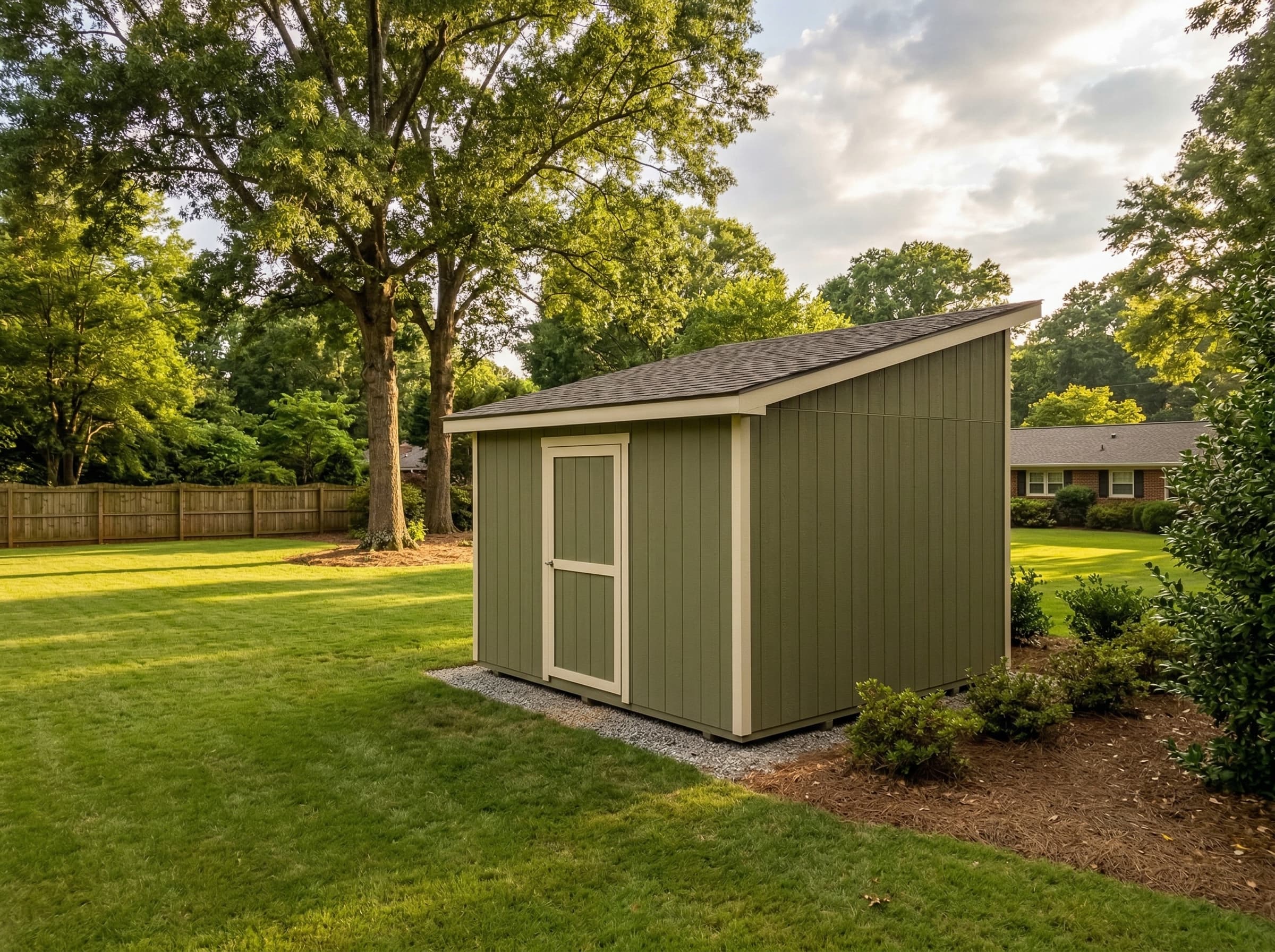
Summary
The 10×12 Lean-To Shed is a 120-square-foot lean to shed (10′ wide × 12′ deep) with 8′ walls and a 3/12 roof pitch. Estimated material cost is $5,155 based on Charlotte, NC area pricing. The lean-to format is the right answer when you want storage without a second roofline competing with your main structure. Plans include interactive 3D preview, framing drawings, an optimized cut list, and a complete materials BOM.
Floor Area
120 sq ft
Dimensions
10′ × 12′
Wall Height
8′
Roof Pitch
3/12
About This Design
A lean-to shed is the most space-efficient structure you can build along a fence line or against a garage wall. The single-slope roof runs from the high front wall at 8 feet down to the low rear wall — on a 3/12 pitch across a 10-foot depth, that drops the rear wall to roughly 5½ feet, keeping the overall profile low and unobtrusive while maximizing interior cubic footage.
This 10×12 design captures 120 square feet of floor area in a profile that reads as an extension of whatever structure it sits beside rather than a standalone building. The sloped ceiling follows the roofline, which gives the front of the shed full 8-foot headroom and makes it comfortable to work near the door even though the rear wall is lower. Drainage and snow all shed toward the back — away from the entry.
The centered front door and windows on the rear and east walls create workable ventilation paths. The rear window sits high on the low back wall to clear shelving — standard 4-foot-tall shelving units leave enough clearance for a 36-inch window above them at that wall height.
Key Features
- 120 sq ft floor area with a single-slope lean-to roof profile
- 3/12 pitch drops rear wall to ~5½' — low, unobtrusive footprint
- 8' front wall height for comfortable entry and working near the door
- All drainage and snow shed away from the door — toward the back
- 36" door centered on the front wall, windows on rear and side
- Designed to sit flush against a fence, garage wall, or property line
Build Notes
Lean-to framing is simpler than a gable roof in one respect and trickier in another. Rafter cuts are all identical — one plumb cut at the top, one bird's mouth at the top plate of the front wall, and one tail cut at the rear. On a 3/12 pitch over 10 feet of depth, the rafter length is approximately 120½ inches with a standard 12-inch overhang at the front. The engine generates the exact birdsmouth seat depth and all cut angles.
The front wall is taller than the rear wall: the front plates are at 8 feet and the rear plates sit at roughly 5 feet 7 inches. Frame both walls first, standing and bracing them plumb. The rafters then bridge the gap, running from front to back. Use 2×6 rafters at 24-inch spacing for a 10-foot span at 3/12 — this is a forgiving pitch and the span is short enough that you will not hit deflection limits in most snow zones.
Floor framing uses three 4×6 skids running the 12-foot direction with 2×6 joists at 16-inch spacing. Set the skids with a slight forward tilt if the site allows, to promote drainage away from any adjacent structure.
Best For
The lean-to format is the right answer when you want storage without a second roofline competing with your main structure. Along a privacy fence, it provides 120 square feet of covered storage that looks like part of the yard design. It excels for firewood covered storage — the shed-style rear wall keeps rain off while the low profile does not block sunlight to the garden. It also works well as an equipment alcove for a side yard where a full gable shed would overwhelm the space.
Interactive 3D Preview
Loading 3D preview…
Frequently Asked Questions
How much does a 10×12 shed cost to build?
A 10×12 lean-to shed runs approximately $4,700–$5,600 in materials for a DIY build, or $19,150–$22,250 installed if you hire a contractor at Charlotte, NC labor rates. The simpler single-pitch roof saves a small amount of lumber over a comparable gable design, but heavier rafters for the low pitch eat into that savings.
Do I need a permit for a 10×12 shed?
At 120 square feet, most jurisdictions require at least a zoning permit. Lean-to sheds placed against a property line fence may trigger additional setback review — confirm the minimum distance from the property line before siting.
What materials are included in the 10×12 shed plans?
The plans include a complete framing package with cut list, materials BOM covering lumber, sheathing, roofing, siding, fasteners, and hardware. The interactive 3D preview lets you see the finished design before you build.


